Use case
Third time this boiler's been reported. Nobody's joined the dots yet.
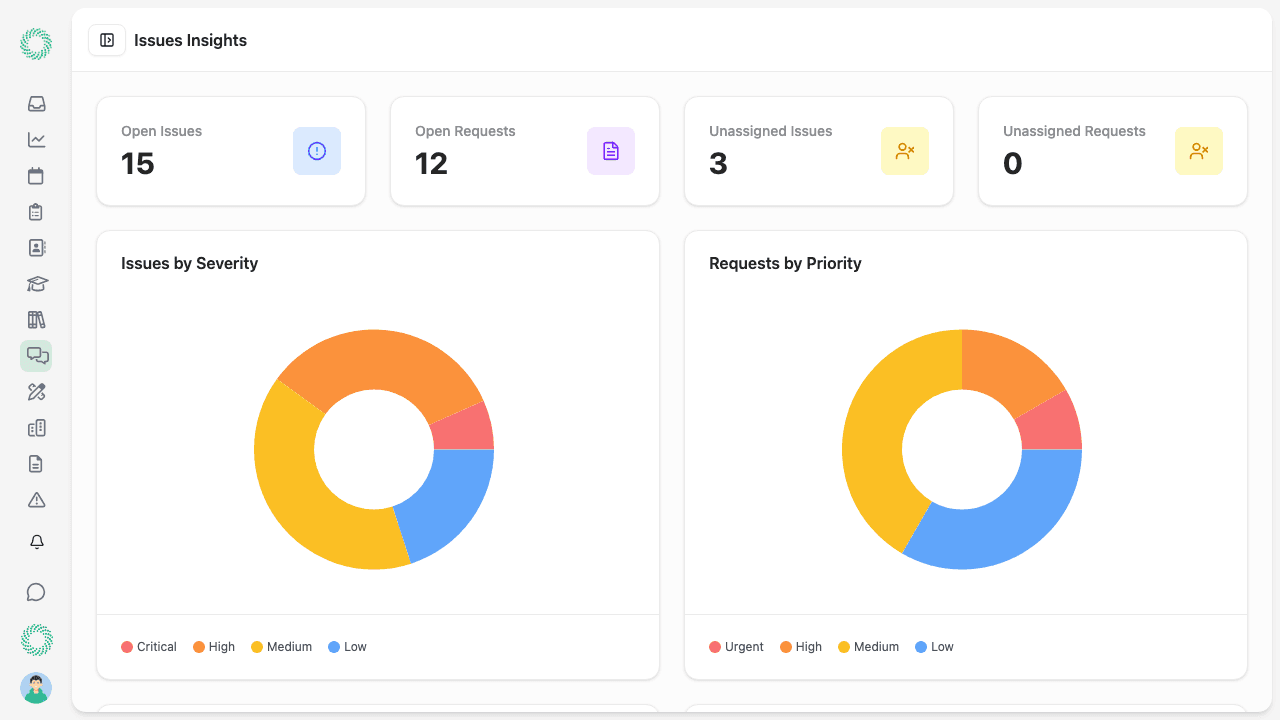
Three service desk issues on the same kit in two months. The asset record shows the pattern because each report links to it. You add a maintenance schedule instead of another one-off fix. The repeat issue turns into a tracked process.
Right now, recurring problems are treated as separate incidents because they are, in five different systems.
The boiler in Block A has been reported three times this term. The first was a call to the office. The second was an email to the facilities manager. The third was a service desk ticket from a different person. None of them are linked. Each one was treated as a new issue, fixed, closed, and forgotten.
The same heating complaints keep coming in from Room 14. The same piece of gym equipment breaks every few months. The data to spot patterns exists, but it sits in different tools, so nobody connects it. The cycle stays: report, fix, close, repeat.
See it in action
With modules connected, the workflow looks like this.
Pattern visible without looking
Every report links to the same asset. The pattern surfaces automatically.
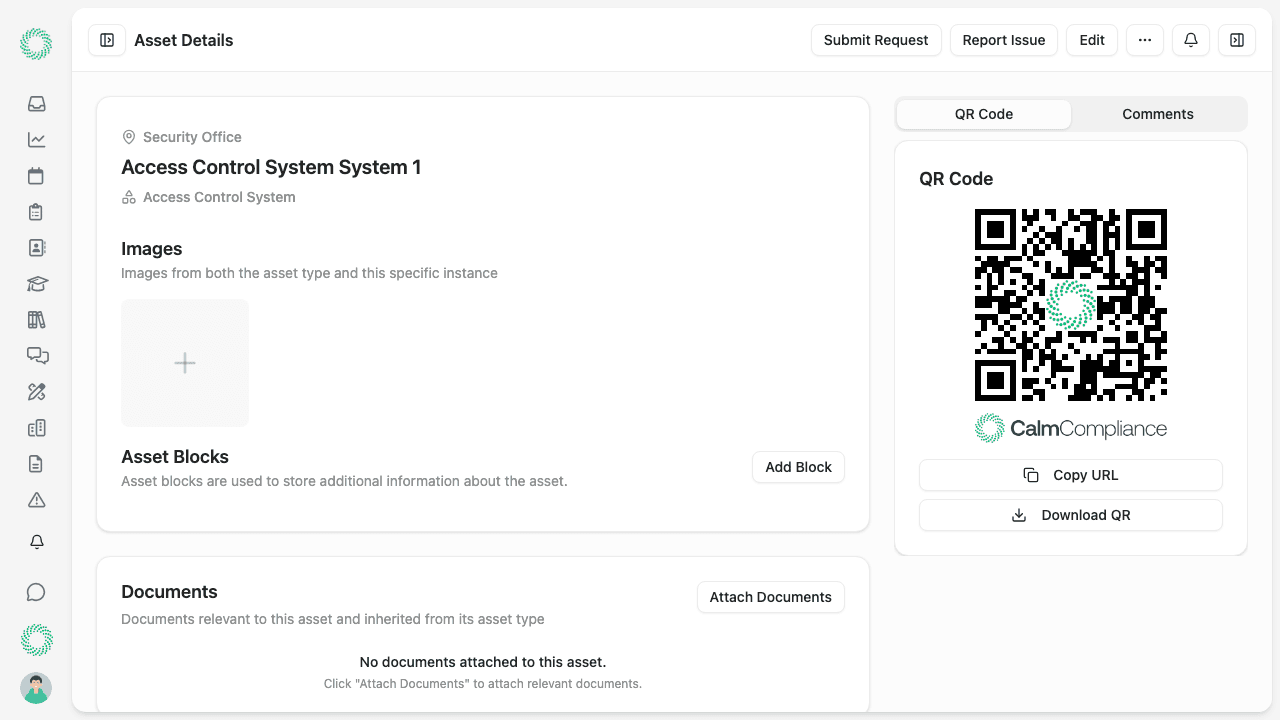
Each report links to the asset it concerns, so the asset record shows full history. Three reports in two months from staff, contractor, and QR scan, all on the same asset. Open the record and the pattern is there. No export required.
- Every report linked to the asset it concerns.
- Whether raised by staff, visitors, or contractors, all reports attach to the same asset record.
- Full service history visible on the asset record.
- Every repair, report, and inspection in one view. Patterns visible without any manual analysis.
- No data export or manual review needed.
- The pattern is there whenever you open the record.

Reactive becomes proactive
Three reactive fixes become one planned maintenance schedule.
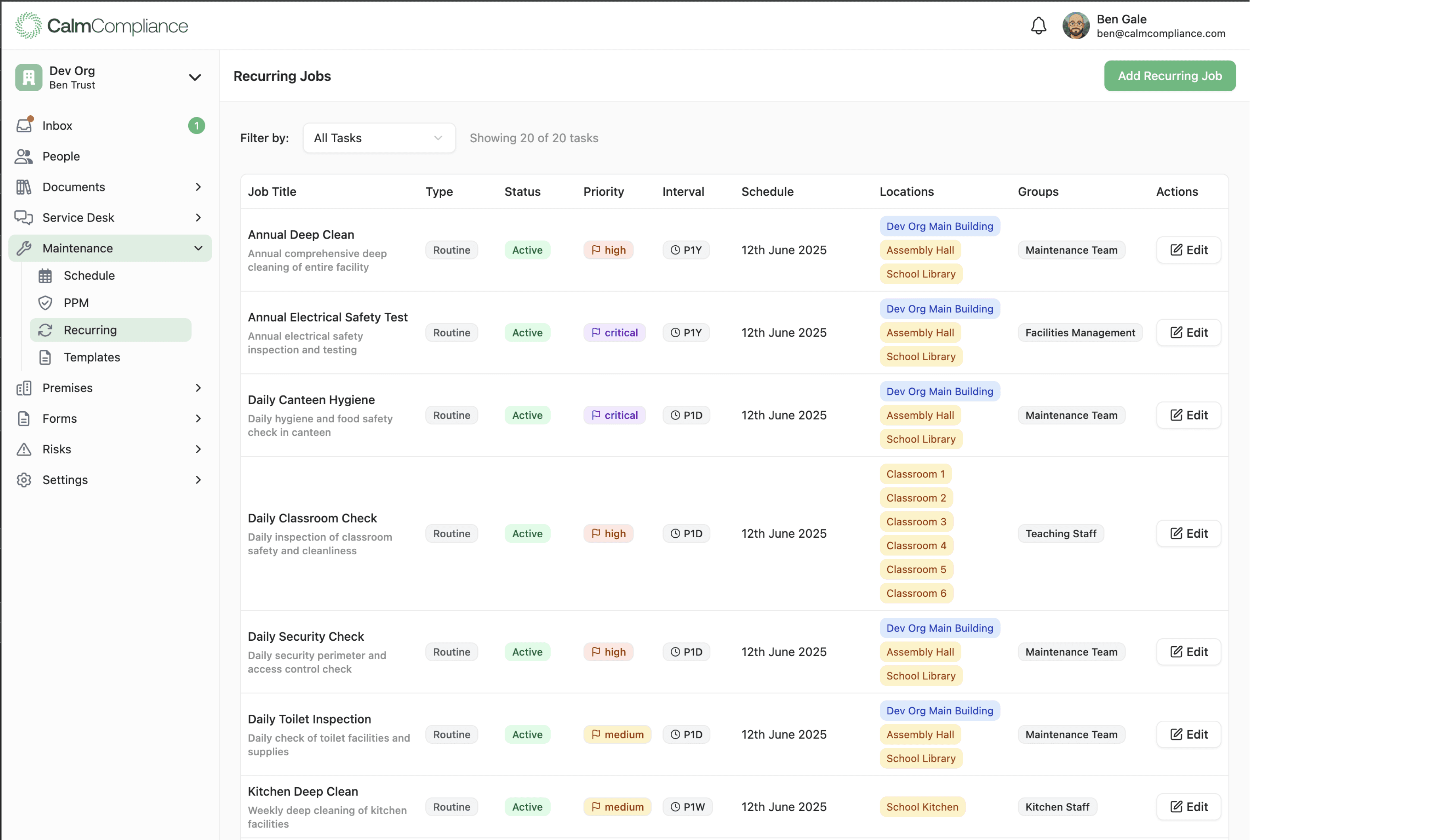
You see the pattern. Instead of logging another reactive repair, you create a maintenance schedule in Operations targeting that asset: monthly inspection, assigned to the right team, checklist attached. The recurring problem becomes a managed process. Future work orders are generated automatically. Emergency call-outs are replaced by a predictable, scheduled process.
- Create a maintenance schedule targeting the asset.
- Set up in Operations with the asset as the target. Schedule, checklist, and assignment all in one place.
- Recurring work orders generated automatically.
- Set once. The schedule runs until you change it.
- Reactive call-outs replaced by predictable planned work.
- Less disruption, and a maintenance record that justifies the schedule.

Evidence for decisions
When someone asks why you replaced the boiler, the record answers.
Capital spend needs justification. The asset record holds it: three linked issues in two months, a pattern of reactive repairs, a maintenance schedule that still isn't resolving it. When finance asks why you want a new boiler, open the asset record. The history makes the case.
- Full issue and repair history against the asset.
- Every linked service desk issue and work order in one place. The pattern of failures is visible at a glance.
- Business case built from the evidence.
- Frequency of failures, maintenance history, ongoing disruption: everything needed to justify replacement.
- Decisions linked to evidence, not memory.
- When the decision is questioned later, the record is there.
What you're replacing
This workflow works the same way everywhere.
The details change depending on your world.
Schools & Children's Services
Recurring IT issues, persistent building faults, repeated safeguarding concerns: patterns visible across all sites. From reactive repairs to proactive maintenance, with evidence for trust-level decisions.
Care Homes
Equipment reliability patterns, recurring environmental issues, trend reporting for regulators: all visible from the asset and incident records. Evidence that risk is being actively managed.
Facilities Management
Asset replacement justification, preventive maintenance business cases, client reporting on recurring issues: all supported by the connected asset record.
Manufacturing & Warehousing
Machine downtime patterns, quality control trends, root cause analysis linked across service desk and operations. Evidence for health and safety improvement programmes.
Leisure & Hospitality
Equipment reliability patterns, recurring safety concerns, seasonal maintenance triggers: visible across sites and asset types. Evidence for capital planning and insurance conversations.
Related use cases
Something goes wrong
Every incident report links to the asset it concerns. See how a single hazard report becomes part of a connected record and how patterns emerge over time.
See use case →Scheduled work needs doing
Once you've spotted the pattern, planned maintenance is the answer. See how recurring work orders are set up, auto-generated, and tracked to completion.
See use case →An inspector is coming
Asset history and maintenance records are part of the inspection evidence picture. See how the connected system makes audit preparation a non-event.
See use case →
See it for yourself.
Book a demo and we'll show you how patterns that are invisible in your current system become obvious in a connected one.